

KAGOSHIMA
/ KAGOSHIMA
The city of Kagoshima is watched over by a spoke-spewing island volcano, Sakurajima. Journey here to experience the spirit of the Satsuma samurai, the hot spring and culinary blessings of the volcano, and living traces of a history that helped usher in the dawn of modern Japan.

Kagoshima, a remarkable city where residents coexist with an active volcano
Just four kilometers from Sakurajima, an active volcano, is the city of Kagoshima. It is an urban center home to roughly 580,000 people. There are few places in the world where residents coexist so intimately with an active volcano. Sakurajima has brought both threats to the city, but also boons, like sweet Sakurajima kominkan citrus, volcanic ash that can be used for preserving food, and comforting hot springs. Kagoshima offers a unique food culture and landscape where the volcano is deeply embedded in daily life.
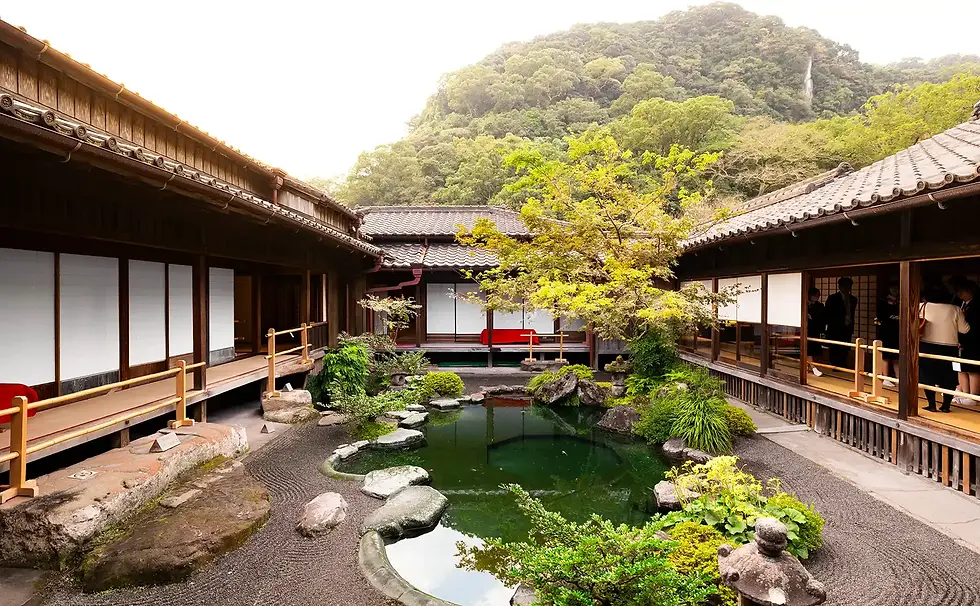
Experience the pulse of the earth and Satsuma samurai culture in a place where legend ancients live on.
Volcanoes are more than just scenery; they are the very pulse of the earth, and a part of daily life. Discover Satsuma ware made from the iron-rich volcanic clay, and foods preserved using volcanic ash. You can also experience other traditional crafts and the Shimazu samurai culture of the nineteenth century. Kirishima, while, is the site of one of Japan's founding myths about the descendant of the grandchild of the Shinto sun deity. In this land of coexistence with volcanoes, explore the profound beauty of Japan and the joy of living in the present created by its past.

Experience a unique food culture and the pulse of the earth with a specialist guide.
In Kagoshima, the fertile volcanic soil and warm southern climate have together produced a unique food culture that includes locally raised kurobuta pork, Japanese black beef, and chicken, as well as a distilled spirit made from sweet potatoes: shochu. Our tours include the chance to see the crater of an active volcano up close, explore landscapes of lava rocks, and go sea kayaking with views of both Sakurajima and seascapes with underwater hot springs. Expert guides will stimulate your curiosity and help you experience this dynamic landscape in multiple hands-on ways
MAIN AREA

AREA 01
Kagoshima area (Kagoshima City and Sakurajima)
This area includes Tenmonkan, southern Kyushu's largest entertainment district (named for an astronomical observatory located there during the Edo period) and an active volcano, Sakurajima. The Sengan-en garden is a UNESCO World Heritage Site and includes an artificial hill that is modeled after Sakurajima. The region also boasts shochu making, the samurai culture of the Shimazu clan, and the once lost and now revived craft arts of Satsuma ware and Satsuma Kiriko glassware.

AREA 02
Kirishima area
Kirishima-Kinkowan National Park was one of Japan's three first national parks. It is home to the Kirishima Jingu Shrine, a National Treasure of Japan and the site of myth in which Japan's first emperor was said to have descended from heaven. The area's abundant water resources and warm climate have nurtured a distinctive culinary terroir, and it is particularly known for traditional sake brewing and other cuisine with koji mold. It's a place to retreat into nature and fine savory gastronomy.

AREA 03
Ibusuki area
The city of Ibusuki offers views of Mt. Kaimon, a volcano popularly known as “Satsuma Fuji.” It also has natural hot sand baths, food cooked in pots heated by natural steam, Japan's first herb farm, and the country's largest production of honkarebushi, the highest grade of bonito flakes. Ibusuki overflows with tropical atmosphere—somewhere to enjoy steam and its fragrance with your whole body.
MAIN AREA
AREA 01
Kagoshima area (Kagoshima City and Sakurajima)
This area includes Tenmonkan, southern Kyushu's largest entertainment district (named for an astronomical observatory located there during the Edo period) and an active volcano, Sakurajima. The Sengan-en garden is a UNESCO World Heritage Site and includes an artificial hill that is modeled after Sakurajima. The region also boasts shochu making, the samurai culture of the Shimazu clan, and the once lost and now revived craft arts of Satsuma ware and Satsuma Kiriko glassware.
AREA 02
Kirishima area
Kirishima-Kinkowan National Park was one of Japan's three first national parks. It is home to the Kirishima Jingu Shrine, a National Treasure of Japan and the site of myth in which Japan's first emperor was said to have descended from heaven. The area's abundant water resources and warm climate have nurtured a distinctive culinary terroir, and it is particularly known for traditional sake brewing and other cuisine with koji mold. It's a place to retreat into nature and fine savory gastronomy.
AREA 03
Ibusuki area
The city of Ibusuki offers views of Mt. Kaimon, a volcano popularly known as “Satsuma Fuji.” It also has natural hot sand baths, food cooked in pots heated by natural steam, Japan's first herb farm, and the country's largest production of honkarebushi, the highest grade of bonito flakes. Ibusuki overflows with tropical atmosphere—somewhere to enjoy steam and its fragrance with your whole body.


REPRESENTATIVE
ACCOMMODATION
Here are some notable places to stay in the Kagoshima area.


Kagoshima Sunamushi Onsen Hakusuikan
This traditional hot spring inn overlooks Kinkowan Bay. It offers full-body onsen detoxification. There's even a recreation of an Edo-period bathhouse, the Genroku Bath, which is over 3,000 square meters large. Guests can savor Kagoshima flavors with seasonal Japanese kaiseki cuisine that features the finest local ingredients.


Wasure no Sato Gajoen
This hideaway inn has eight rooms, each a traditional thatched house relocated from along the Amorigawa River, evoking the feel of a rural village in Japan's ancient landscape. All rooms have baths fed by 100% natural hot spring water directly from the source. The inn serves local cuisine mainly made with vegetables from its own garden and local free-range chicken from its own farm.


Hogetsu
This is a one-group-a-day rental accommodation that gives a modern experience of a traditional samurai residence. With an open-air bath and sauna, it is a comforting home away from home in Kagoshima. A personal chef, while, presents a personal take on regional cuisine using local ingredients. There are also many crafts to explore nearby, such as Oshima-tsumugi silk and Satsuma ware.

ACCESS
Here's how to reach the Kagoshima area.
Directions
For those coming from Tokyo
HANEDA AIRPORT
2h00m
KAGOSHIMA
AIRPORT
For those coming from Osaka
OSAKA INTERNATIONAL AIRPORT
1h20m
KAGOSHIMA
AIRPORT
For those coming from Fukuoka
HANEDA AIRPORT
1h30m
KAGOSHIMA-CHUO
STATION
Direct flight information
Please check the websites of each airport and airline for the latest information.
SEOUL
INCHEON INTERNATIONAL AIRPORT
1h40m
TAIPEI
TAIWAN TAOYUAN INTERNATIONAL AIRPORT
1h55m
HONG KONG
*Suspended
HONG KONG INTERNATIONAL AIRPORT
3h20m
SHANGHAI
*Suspended
SHANGHAI PUDONG INTERNATIONAL AIRPORT
1h55m
KAGOSHIMA
AIRPORT
SUPPORT
The council can arrange transportation for you, please contact us for more information.
You can enjoy the blessings of the volcano in many ways, including hot springs, food, and learning. We propose a new style of travel that connects Kyushu's nature and culture and allows you to experience the unique value of the region.
The charm of the KAGOSHIMA area
Kagoshima, a city that lives with a volcano.
Sakurajima is an active volcano that contributed to samurai culture. Its splendid appearance still watches over the locals and fascinates visitors from all over the world. The city has a culture nurtured by both the warm soil and dynamic urban functions. There are many sights to see, including cultural and historical heritage sites, and places where you can feel the beginnings of modern Japan.